Cognitive Potential & Mental Resilience
Understanding your child's brain chemistry for optimal focus, mood, and stress management
Cognitive Potential & Mental Resilience Panel
This panel analyses seven neurotransmitter pathways including dopamine, serotonin, and BDNF - the chemical messengers that dictate mood, focus, sleep cycles, and stress resilience.
Understanding Your Child's Brain Chemistry
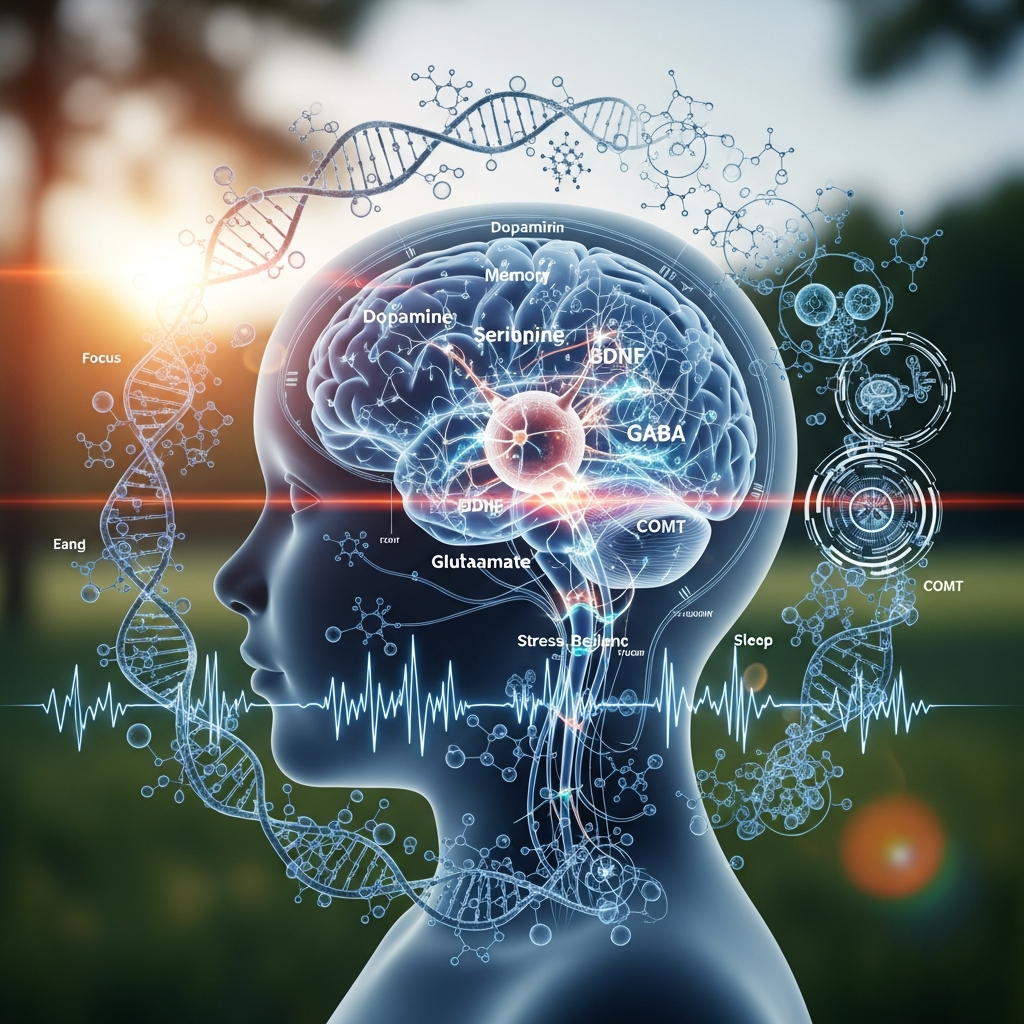
Growth and adolescence challenge brain development. This panel analyses seven neurotransmitter pathways including dopamine, serotonin, and BDNF pathways, the "chemical messengers" that dictate mood, focus, sleep cycles, and stress resilience.
Discover if your child's brain chemistry benefits more from specific foods, supplementations or lifestyle changes to support focus and calm.
Neurotransmitter Pathways We Analyze
Dopamine Pathway
Affects motivation, focus, reward-seeking behavior, and attention span.
Serotonin Pathway
Influences mood stability, happiness, sleep quality, and appetite regulation.
BDNF Pathway
Brain-derived neurotrophic factor for learning, memory, and neuroplasticity.
COMT Gene
The "Worrier vs. Warrior" gene affecting stress hormone clearance.
GABA Pathway
Calming neurotransmitter affecting anxiety levels and sleep quality.
Glutamate Pathway
Excitatory neurotransmitter affecting learning, memory, and brain energy.
What You'll Gain From This Test
Improved Focus
Discover natural ways to support concentration based on dopamine pathway genetics.
Better Sleep
Learn about genes affecting circadian rhythms and melatonin production.
Stress Resilience
Understand COMT gene variants and get strategies for stress management.
Mood Stability
Identify genetic factors affecting serotonin production and mood regulation.
Brain-Boosting Nutrition
Get specific food and supplement recommendations for optimal brain function.
Lifestyle Optimization
Learn about morning light exposure, exercise timing, and daily rhythms that work for your child.
Who Benefits Most From This Panel
Academic Pressure
Support concentration & focus
Discover natural ways to enhance focus and reduce exam anxiety based on genetics.
Sleep Disturbances
Improve sleep quality
Learn about genes affecting circadian rhythms and melatonin production.
Mood Swings
Stabilise emotions
Identify genetic factors affecting serotonin and dopamine balance.
Neurodivergent Children
Support brain chemistry
Get insights to support focus and calm naturally, regardless of formal diagnosis.
Support Your Child's Brain Health Naturally
Get science-backed insights to help your child thrive academically and emotionally.
Order Your Kit →Frequently Asked Questions
No. Genetic testing cannot diagnose ADHD or Autism. However, it can identify imbalances in dopamine and serotonin pathways common in neurodivergent children, helping parents support brain chemistry naturally.
We look at the COMT gene (the "Worrier vs. Warrior" gene). This determines how fast their brain clears stress hormones. We provide strategies to help them manage anxiety effectively.
Yes. If your teen has genetic variants affecting serotonin production, they may feel hormonal shifts more intensely. We suggest lifestyle habits and foods to help stabilise mood.
Yes. Some children have variants in dopamine receptors that make them crave sugar more intensely for a "dopamine hit," followed by a harder crash. We help identify if your child is a "Sugar Seeker."
This is a tool to support the brain, not a medical prescription. Many parents use these insights to optimise nutrition, which can sometimes reduce the need for higher medication doses. Always work with your doctor.
It depends on their CYP1A2 gene. Some metabolize caffeine quickly for a performance boost; others metabolize it slowly, leading to anxiety. We tell you which category your teen falls into.